What Does a Pergola Cost in Brisbane?
There’s no single price for a pergola in Brisbane, because the cost is driven by what you build, not by a flat rate. The biggest factors are size, the materials and timber species you choose, the roof type, whether the structure needs engineering and council approval, and how easy your site is to work on. A small open timber pergola sits at the low end; a large engineered structure with a solid Colorbond roof sits much higher.
Here’s a straight breakdown of what actually moves the price, so you know what you’re paying for before you get a quote.
We build pergolas, patios and carports across Brisbane and the Redlands, and we quote each one on its specifics — no surprises. If you want a figure for your place, call 07 3064 0661 for a free quote.
What are the main things that affect the cost of a pergola?
Six things do most of the work in a pergola quote. Get a feel for these and you’ll understand why two pergolas that look similar can be priced very differently.
Size and span
The bigger the footprint, the more materials, footings and labour — that’s the obvious one. The less obvious one is span. A pergola that has to reach a long way between posts needs larger beams or steel to carry the load without sagging, and that costs more than the same area broken up with extra posts. Wide, post-free spans look great but they’re an engineering decision, not just a size one.
Materials and timber species
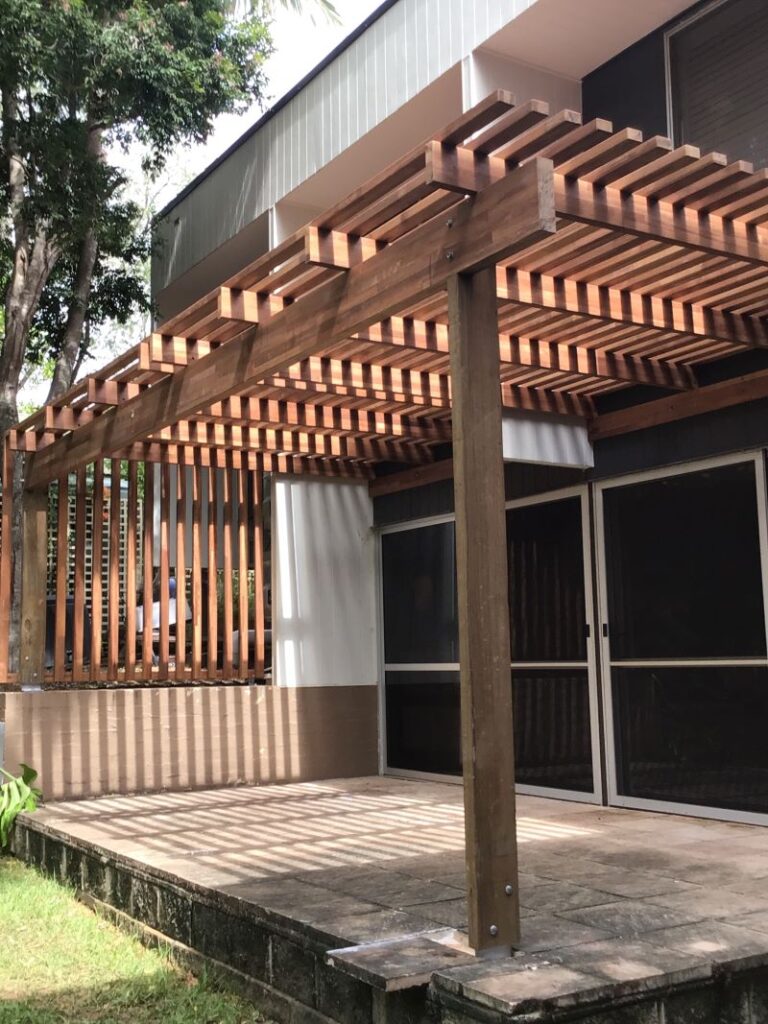
This is where prices separate the most. A treated pine pergola is the most affordable starting point. Hardwoods like merbau or spotted gum cost more but handle Brisbane’s sun and humidity better and look the part. Powder-coated steel or aluminium framing sits in its own bracket again. The species and material you choose set the base cost and the long-term maintenance, so it’s worth weighing both.
Roof type
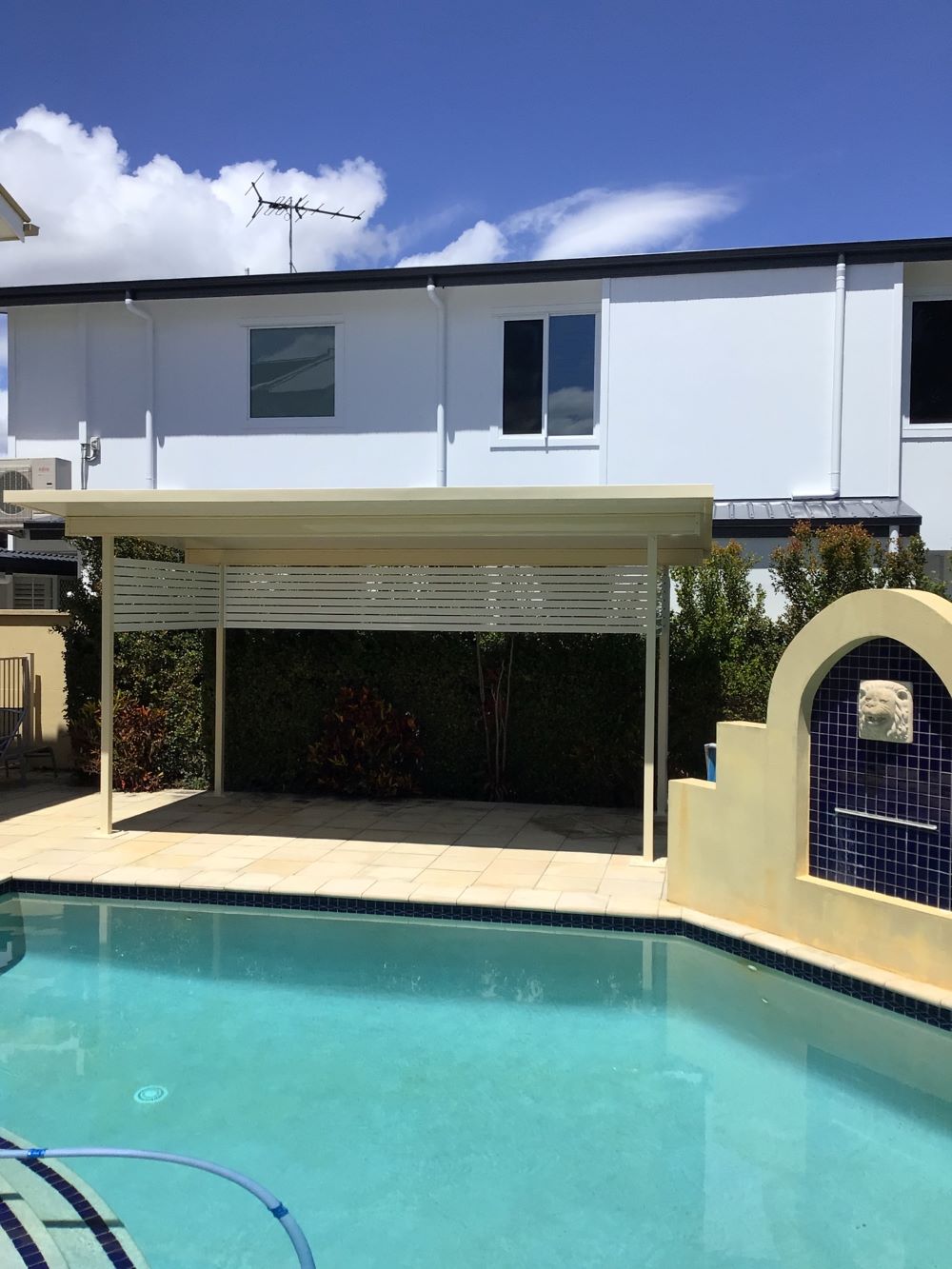
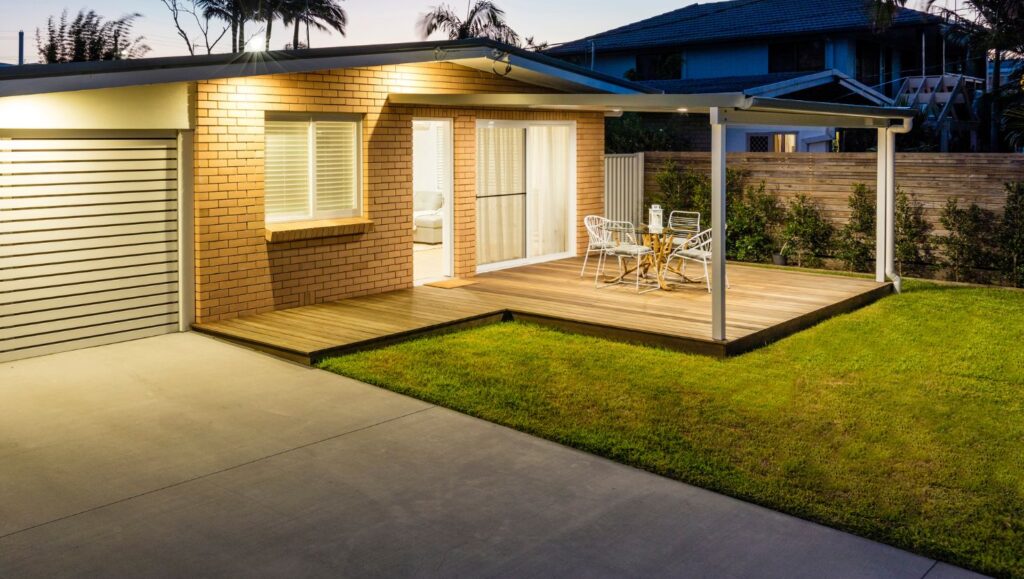
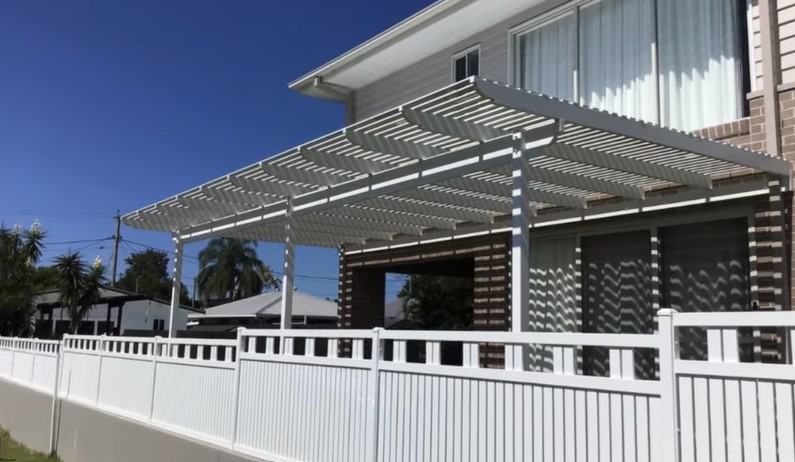
An open pergola — just the frame and rafters — is the cheapest version. Add a roof and the price climbs depending on what you choose: polycarbonate sheeting, insulated panel, or a solid Colorbond roof that turns the pergola into more of an all-weather patio. Each step up adds material and labour, and a solid roof often brings extra structural and approval requirements with it.
Engineering and council approval
A low, simple, freestanding pergola may need little to no engineering. A larger structure, a wide post-free span, a pergola attached to the house, or anything in a flood or wind-exposed location usually needs engineered footings and certification. If your design needs building approval through a certifier — which many do — that’s a real line item too. Our council approval guide covers when approval applies.
Site access and ground conditions
How easy it is to get to the build spot matters more than people expect. A flat backyard with side access is straightforward. A sloping block, reactive clay soil, a tight inner-city site, or a spot you can only reach by carrying materials through the house all add time and labour. Difficult footings — rock, fill, or a slope — push the cost up before a single post goes in.
Finishes and extras
Lighting, fans, privacy screens, decking underneath, screening plants, paint or stain finish, gutters on a roofed pergola — each extra adds to the total. None of them are essential, but they’re where a budget build and a high-end build pull apart.
Why won’t a builder just give me a price over the phone?
Because an honest number needs your specifics, and a number pulled out of the air usually ends in either a nasty mid-job variation or a quote padded to cover the unknowns. Neither is fair to you.
A proper quote comes after we know your size, materials, roof type, site conditions and whether approval is needed. That’s the only way the figure you’re given is the figure you pay. If a builder quotes a flat rate sight-unseen, ask what happens when they hit hard ground or a setback issue — that’s usually where the “extras” appear.
How can I keep the cost down without cutting corners?
A few choices genuinely move the budget, and none of them mean a worse build.
Keeping the design to standard spans (rather than a wide post-free reach) avoids upsizing beams or going to steel. Choosing an open or polycarbonate roof instead of a full insulated Colorbond roof is a big lever if you don’t need year-round weather protection. Picking treated pine over hardwood lowers the upfront cost, as long as you’re happy to maintain it. And building on an accessible, level part of the yard avoids the footing and access costs that come with a slope or a tight site.
The thing not to cut is engineering, certification and a licensed builder. In Queensland, building work over $3,300 must be done by a QBCC-licensed builder — skipping that to save money risks your insurance, your warranty, and the structure itself.
Closing
A pergola in Brisbane is priced on what you build: size, materials, roof, engineering, approval and site access. Tell us those and we’ll give you a real number — no surprises, no flat-rate guesswork.
For a free, specific quote, call 07 3064 0661 or get in touch with the details of your block. See our pergola, carport and deck work to get a feel for what’s possible.
FAQ
How much does a pergola cost in Brisbane?
There’s no fixed price — a pergola is quoted on its specifics, not a flat rate. The cost is driven by size and span, the materials and timber species (treated pine is cheapest, hardwoods like merbau or spotted gum cost more, steel or aluminium more again), the roof type (open, polycarbonate, or solid Colorbond), whether engineering and council approval are needed, and how easy your site is to access. A small open timber pergola sits at the low end; a large engineered structure with a solid roof sits much higher. The honest way to get a figure is a quote against your actual design and block. Call us on 07 3064 0661 and we’ll give you a real number with no surprises.
Why does the type of timber change the price so much?
Because timber species differ in cost, durability and how they cope with Brisbane’s climate. Treated pine is the most affordable and works well when it’s maintained, but it needs regular sealing or painting. Hardwoods such as merbau and spotted gum cost more upfront, but they handle the city’s sun, humidity and the occasional storm better and hold their look with less fuss. The species you choose sets both your starting price and your long-term maintenance, so it’s worth thinking about the whole life of the pergola, not just the build cost. We’ll talk you through the trade-offs for your situation so you’re choosing on facts, not just the cheapest line.
Is a pergola or a carport cheaper to build?
It depends entirely on size, roof and materials rather than the label. An open pergola with no roof is generally the most affordable structure to build, because there’s no roofing material or the extra structural work a roof brings. A carport is a roofed structure by definition, so it carries roofing and usually building approval costs, which can make it more than a basic pergola of the same footprint. But a large, fully roofed pergola can easily cost more than a small simple carport. The fairest comparison is to quote both for your specific block and use. We build both and can price them side by side so you can decide.
Does a pergola need council approval, and does that add to the cost?
Often yes, and when it applies it’s a genuine line item. Many pergolas in Brisbane and the Redlands need building approval through a licensed certifier, and that certification has a cost. Whether it applies depends on the size, height, roof, whether it’s attached to the house, your boundary setbacks, and any overlays on your block. A small, low, open freestanding pergola is the most likely to be exempt; anything larger or roofed usually isn’t. We factor approval and certification into the quote where it’s needed, so the figure you get reflects the real, finished, compliant structure — not a price that balloons later.
What’s the most expensive part of a pergola build?
Usually it’s the combination of a large span and a solid roof, because both drive structural cost. A wide, post-free pergola needs larger beams or steel and engineered footings to carry the load, and a solid insulated or Colorbond roof adds material, labour and often extra certification. Difficult site conditions — a sloping block, reactive clay, rock, or hard access — are the other big cost driver, because they make footings and material handling slower and harder. By contrast, a modest open pergola on a flat, accessible yard is the most affordable build. Knowing which of these apply to your project is exactly why a site-specific quote beats a phone-number guess.
Can I build a pergola myself to save money?
You can do some of it, but the structural build has legal limits in Queensland. Any building work valued over $3,300 (labour and materials combined) must be carried out by a QBCC-licensed builder — and most built pergolas exceed that once materials and installation are counted. Doing structural work yourself above that threshold isn’t just risky, it’s an offence, and it can void your home insurance and any warranty if the structure fails or is damaged in a storm. A licensed build also comes with the protection of the Queensland Home Warranty Scheme where it applies. If budget is the concern, the better savings come from design and material choices, not from skipping the licensed builder. We’re QBCC-licensed (Lic. 15154266) and quote honestly so the cost is clear up front.